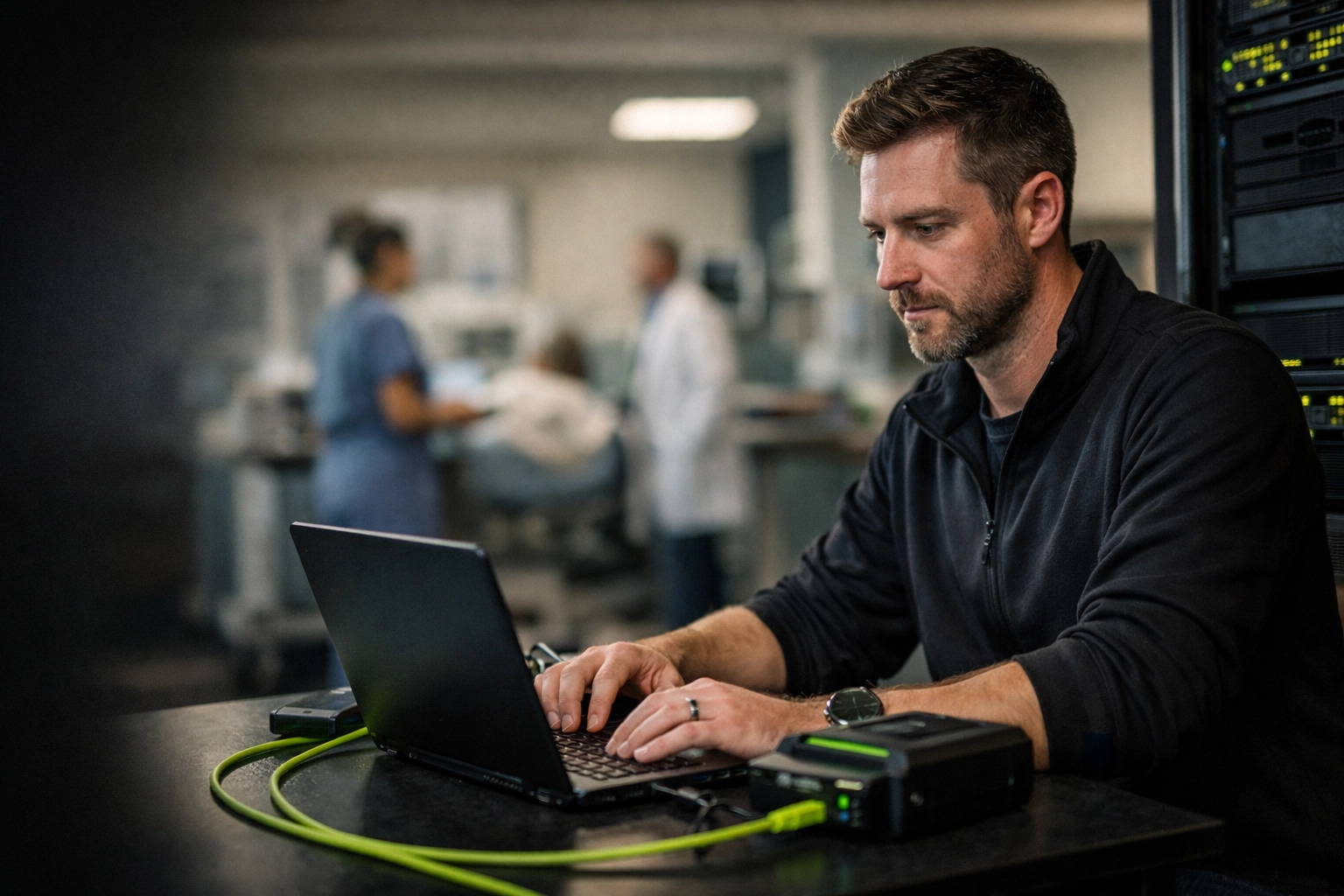
Your clinic runs on systems that can't go down. Patient records, scheduling software, billing systems, diagnostic tools: all of it lives on a network that ransomware can lock in seconds.
Most healthcare clinics in Lincoln and Omaha operate with minimal IT protection. They trust basic antivirus software and hope nothing happens. That approach fails the moment ransomware encrypts patient files and demands payment to unlock them.
If you run a clinic, surgery center, or specialty practice in Nebraska, you're dealing with two realities: HIPAA compliance isn't optional, and ransomware attacks specifically target healthcare because they know you'll pay.
Why Healthcare Clinics in Nebraska Are Prime Ransomware Targets
Healthcare organizations face more cyberattacks than almost any other industry. The reason is simple: patient data is worth more than credit card numbers on the black market, and clinics often lack the IT infrastructure that larger hospitals deploy.
Small and mid-sized clinics are especially vulnerable:
- Limited IT staff. Most clinics don't have dedicated cybersecurity personnel. They rely on part-time IT contractors or staff who manage systems alongside other responsibilities.
- Legacy systems. Electronic health record (EHR) platforms, imaging systems, and billing software often run on outdated infrastructure that hasn't been patched or updated.
- Interconnected devices. Medical devices, diagnostic equipment, and administrative systems all connect to the same network: creating multiple entry points for attackers.
- High-value data. Patient health records contain Social Security numbers, insurance details, medical histories, and billing information. All of it can be exploited.
Ransomware gangs know that clinics can't afford downtime. When patient scheduling systems go offline or EHR platforms get locked, operations stop. That pressure makes healthcare one of the most targeted sectors.

What Ransomware Actually Does to Your Clinic Operations
Ransomware doesn't just lock files: it shuts down your ability to operate.
Here's what happens during an attack:
Day 1: An employee clicks a phishing email or visits a compromised website. Ransomware spreads silently across your network, encrypting files on servers, workstations, and backups.
Day 2: Your front desk can't access patient schedules. Your billing department can't process insurance claims. Your providers can't pull up medical histories. Everything stops.
Day 3: You receive a ransom demand: usually in cryptocurrency: with a deadline. Pay within 48 hours or the decryption key disappears. Patient data might also be threatened with public release.
Day 7 and beyond: Even if you pay, there's no guarantee you'll get your data back. Recovery takes weeks. You're reporting the breach to OCR (Office for Civil Rights), notifying patients, and dealing with regulatory fines.
Real case: Winnebago Comprehensive Healthcare System in Nebraska partnered with CISA (Cybersecurity & Infrastructure Security Agency) to provide employee cybersecurity training after recognizing that staff education is critical to preventing attacks that compromise sensitive patient information.
Most clinics don't recover quickly. The average cost of a healthcare data breach in the U.S. is over $10 million when you factor in downtime, regulatory penalties, legal fees, and lost patient trust.
HIPAA Compliance Isn't Optional: And Neither Is Protection
HIPAA requires healthcare organizations to implement safeguards that protect patient data. That includes:
- Access controls to ensure only authorized personnel can view records
- Encryption for data at rest and in transit
- Audit logs that track who accessed what and when
- Risk assessments to identify vulnerabilities
- Incident response plans so you know what to do when something goes wrong
Most clinics treat HIPAA as a paperwork exercise. They complete the required documentation but don't actually implement the technical safeguards that prevent breaches.
That's a problem.
If ransomware locks your systems and patient data gets exposed, OCR will investigate. They'll review your security measures, your response protocols, and whether you conducted regular risk assessments. If you failed to meet HIPAA requirements, you're facing fines that start at $100 per violation and can reach $1.5 million annually for each provision you ignored.
Ransomware protection and HIPAA compliance aren't separate issues: they're the same thing. You can't comply with HIPAA without cybersecurity infrastructure that actively defends against threats.
What Real Ransomware Protection Looks Like
Ransomware protection for healthcare clinics requires layered defenses that stop attacks before they spread.
Here's what that looks like in practice:
24/7 Threat Monitoring
Real-time monitoring detects unusual activity on your network: failed login attempts, file encryption patterns, or unauthorized access to patient records. Managed detection and response (MDR) services analyze this activity and respond before ransomware spreads.
CyFlare, a managed security provider serving healthcare organizations, reports a 97% true positive rate for threat detection and 98% automated remediation: meaning most threats are stopped without manual intervention.
Endpoint Protection on Every Device
Every workstation, laptop, and server needs endpoint detection and response (EDR) software that goes beyond basic antivirus. EDR monitors behavior, isolates infected devices, and prevents ransomware from moving laterally across your network.
Network Segmentation
Your billing systems shouldn't be on the same network as your EHR platform, and medical devices shouldn't connect directly to administrative workstations. Segmentation limits how far ransomware can spread if one system gets compromised.
Regular Vulnerability Scanning
Outdated software and unpatched systems create entry points for attackers. Vulnerability scanning identifies weak spots before ransomware gangs exploit them.
Backup Systems That Actually Work
Ransomware often targets backups first. Your backup strategy needs to include offsite storage, immutable backups (that can't be altered or deleted), and regular restoration tests to ensure you can recover quickly.
Staff Training
Most ransomware infections start with phishing emails. Your front desk, billing staff, and clinical team need to recognize suspicious messages and know what to do if they click something they shouldn't.
How SAINT Protects Healthcare Clinics in Lincoln and Omaha
SAINT provides cybersecurity services for healthcare clinics in Nebraska that need HIPAA-compliant IT infrastructure and ransomware protection that actually works.
Here's how we approach it:
Step 1: Security Assessment
We start with a full security audit: reviewing your network architecture, access controls, backup systems, and compliance status. We identify gaps that put you at risk and prioritize fixes based on impact.
Step 2: Deploy Layered Defenses
We implement endpoint protection, advanced firewalls, intrusion detection systems, and network segmentation tailored to your clinic's operations. We don't disrupt patient care: we stabilize your infrastructure while you keep running.
Step 3: 24/7 Monitoring and Response
Our managed detection and response services monitor your systems around the clock. If ransomware attempts to spread, we isolate infected devices, block malicious traffic, and contain the threat before it impacts operations.
Step 4: HIPAA Compliance Support
We help you meet HIPAA requirements: not just check boxes. That includes access logging, encryption, risk assessments, and incident response planning that satisfies regulatory audits.
Step 5: Ongoing Training and Updates
Cybersecurity isn't a one-time project. We provide staff training, conduct regular vulnerability scans, and update your defenses as new threats emerge.
We work with clinics in Lincoln and Omaha that can't afford downtime and can't risk regulatory fines. We don't oversell services you don't need: we deploy what protects your operations and keeps you compliant.
Nebraska-Based Cybersecurity Support That Understands Healthcare
Local cybersecurity firms like CyberGlobal NE, DataVizion, and Klipsys Technologies offer specialized services for healthcare organizations across Nebraska: providing HIPAA compliance support, ransomware defense, and rapid incident response.
What sets Nebraska-based providers apart is proximity. When ransomware hits, you need someone who can respond immediately: not a call center three time zones away. Local support means faster response times, better understanding of regional compliance requirements, and direct access to the people managing your security.
SAINT operates in Lincoln and Omaha. We're veteran-owned, Midwest-based, and built for businesses that need straightforward IT support without the corporate runaround.
If your clinic is dealing with outdated systems, inconsistent IT support, or uncertainty about HIPAA compliance: we fix it before ransomware does.
If your business in Lincoln or Omaha is dealing with slow systems, downtime, or unreliable IT support : SAINT fixes it before it becomes a problem.
Call 531-625-2111 or visit saintsecured.com to schedule a security assessment.