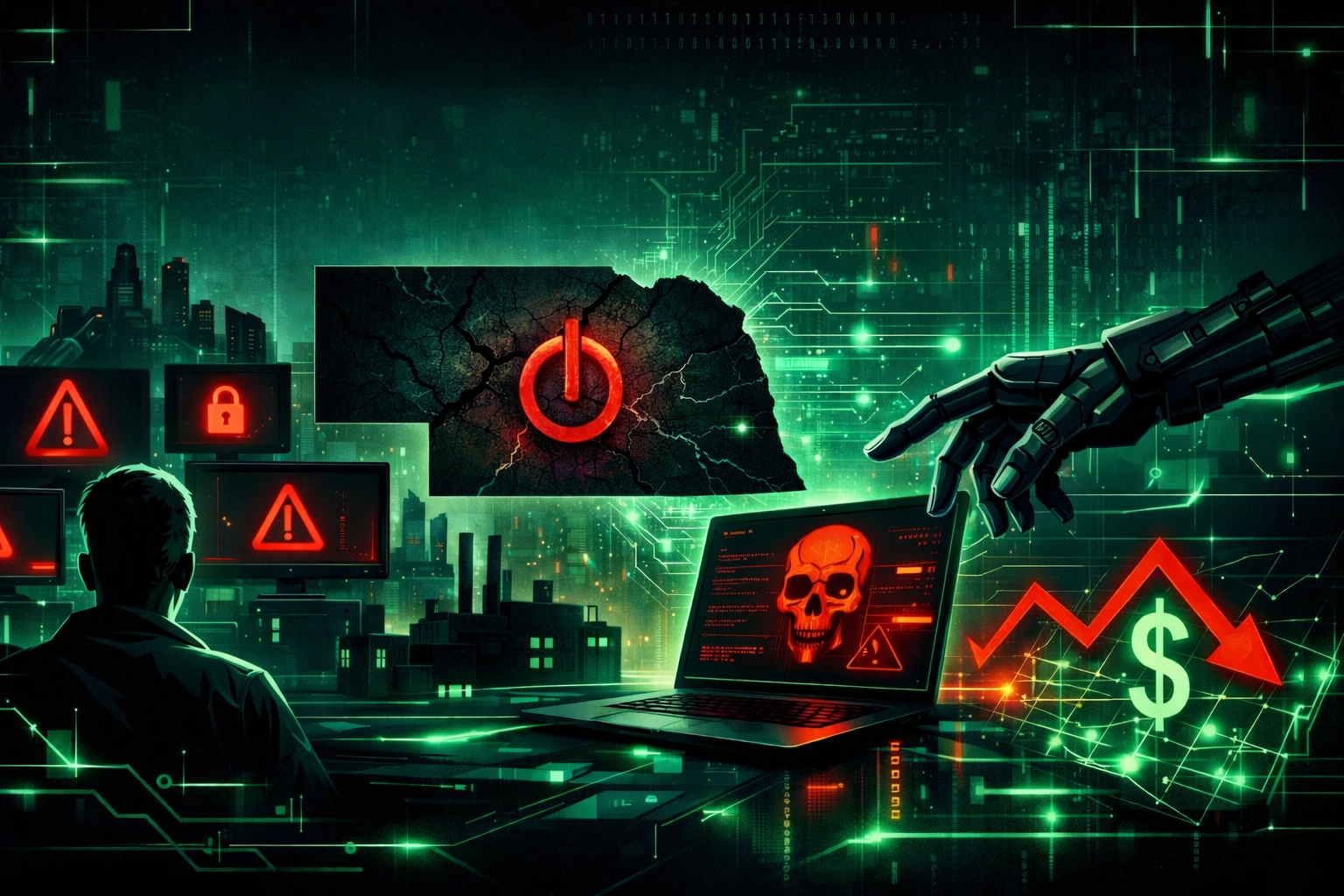
Your ERP system locks up at 7:00 AM. Production stops. Your line supervisor calls IT. No answer. He calls again. Still nothing. By 8:30, you've got three shifts standing around, raw materials cooling, and a shipping deadline slipping through your fingers.
That's a Dark Day.
And if you're running a manufacturing operation in Lincoln or anywhere across Nebraska, you already know the math doesn't lie. One unplanned outage doesn't just cost you IT repair hours: it costs you labor, materials, contracts, and reputation.
The question isn't whether downtime will happen. It's whether you're managing IT like the backbone of your operation or treating it like an expense you call when something breaks.
What a Dark Day Actually Costs a Nebraska Manufacturer
Most business owners think about downtime in terms of lost revenue per hour. That's a start. But it's incomplete.
Here's what really happens when your systems go dark:
Production halts. Your line stops. Machines sit idle. Operators wait. If you're running lean schedules or just-in-time inventory, you don't have buffer time built in. Every hour of delay cascades into the next shift.
Shipping commitments break. Miss a load window and you're not just late: you're rescheduling freight, paying expedite fees, or losing the order entirely. Your client doesn't care why you missed the deadline. They care that you did.
Data disappears. If your ERP or production management system isn't properly backed up or redundant, you lose production logs, inventory counts, and order history. Reconstruction takes days, not hours.
Compliance risk escalates. Depending on your industry, you may be required to document production conditions, equipment logs, or material traceability. System failures can create compliance gaps that trigger audits or insurance issues.
Reputation erodes. One late shipment might get forgiven. Two in a quarter and your client starts looking at your competitor.
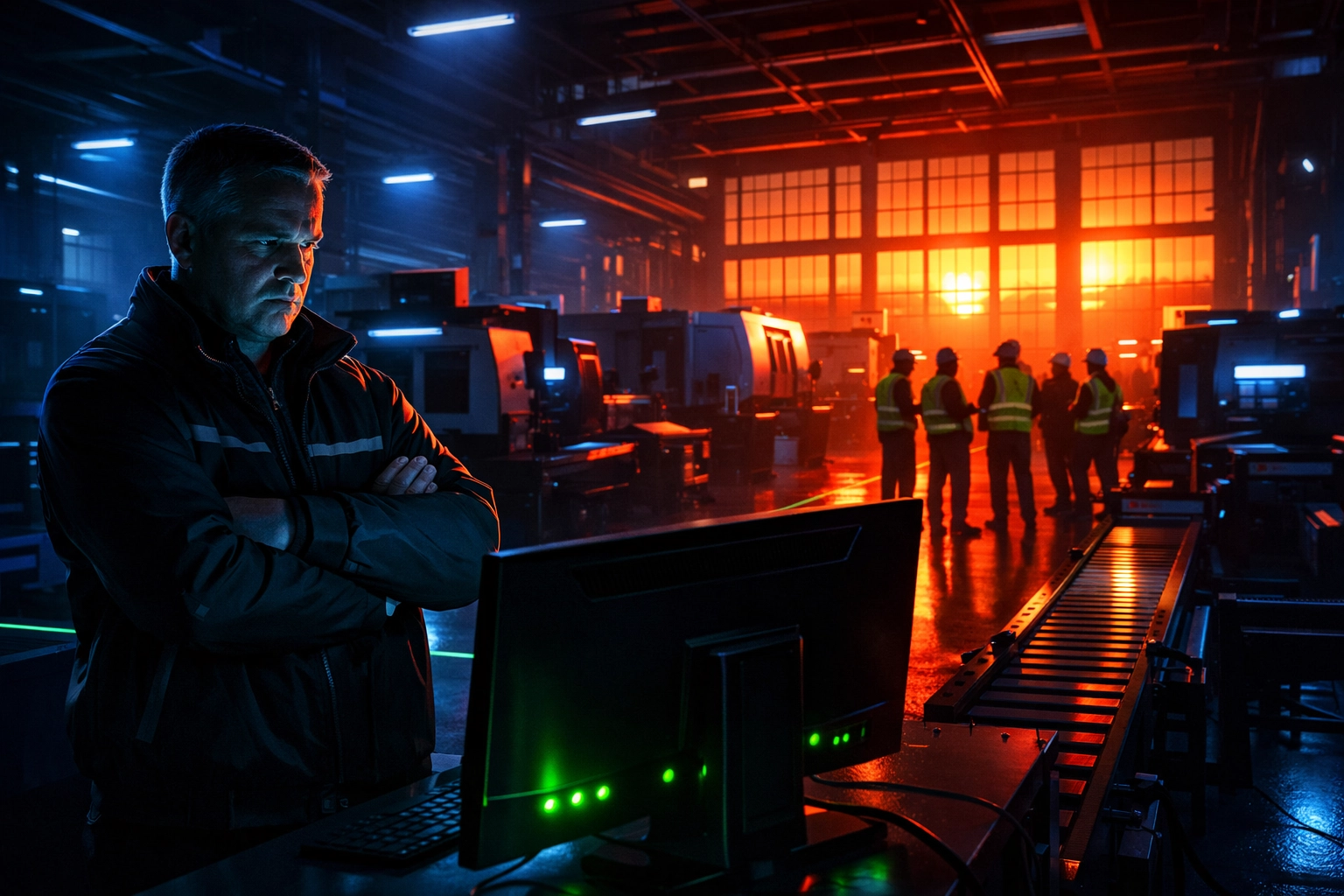
For a mid-sized manufacturer running two shifts with 30+ employees, a single day of full downtime can easily cost $50,000 to $150,000 when you factor in lost production, idle labor, and missed shipments. That's not a scare tactic. That's operational math.
Why Reactive IT Fails Manufacturers
Reactive IT is the "call someone when it breaks" model. It's cheap until it's catastrophic.
Here's why it doesn't work for manufacturing operations:
No visibility into what's failing. Reactive IT waits for things to break. You don't know your firewall is outdated until ransomware locks your files. You don't know your server is overheating until it shuts down mid-shift. By the time you're calling for help, you're already losing money.
No redundancy planning. If your network switch dies and you don't have a backup configured, you're waiting days for replacement hardware and reconfiguration. A proactive managed IT partner stages spares and maintains failover systems so you stay online.
No documentation. When something breaks and you call a random IT vendor, they don't know your environment. They don't have network diagrams. They don't know which systems talk to which machines. Every emergency becomes a discovery project, burning hours while your team sits idle.
Vendor finger-pointing. When your ERP vendor blames the network, and your network guy blames the firewall, and nobody wants to own the problem: that's reactive IT in action. You waste time managing contractors instead of running your plant.
Manufacturing doesn't run on luck. It runs on predictable systems. Reactive IT is the opposite of that.
The Hidden Operational Ripple Effects
Downtime doesn't just stop production. It creates cascading failures across your operation that most business owners don't account for until they've lived through it.
Inventory chaos. If your ERP goes offline mid-shift, you lose real-time tracking. Raw materials get pulled without logs. Finished goods ship without proper updates. By the time systems come back online, your inventory counts are wrong and you're doing manual reconciliation for days.
Quality control gaps. If your production management system crashes, you may lose traceability on which batch used which materials. In regulated industries, that's not just inconvenient: it's a compliance failure that can shut you down.
Payroll confusion. Timekeeping systems tied to your network go dark with everything else. If employees can't clock in or out accurately, you're either overpaying or underpaying, and both create problems.
Customer communication breakdown. When your systems are offline, you can't pull order data, check shipping status, or respond to client inquiries. Radio silence makes clients nervous. Nervous clients call your competitors.
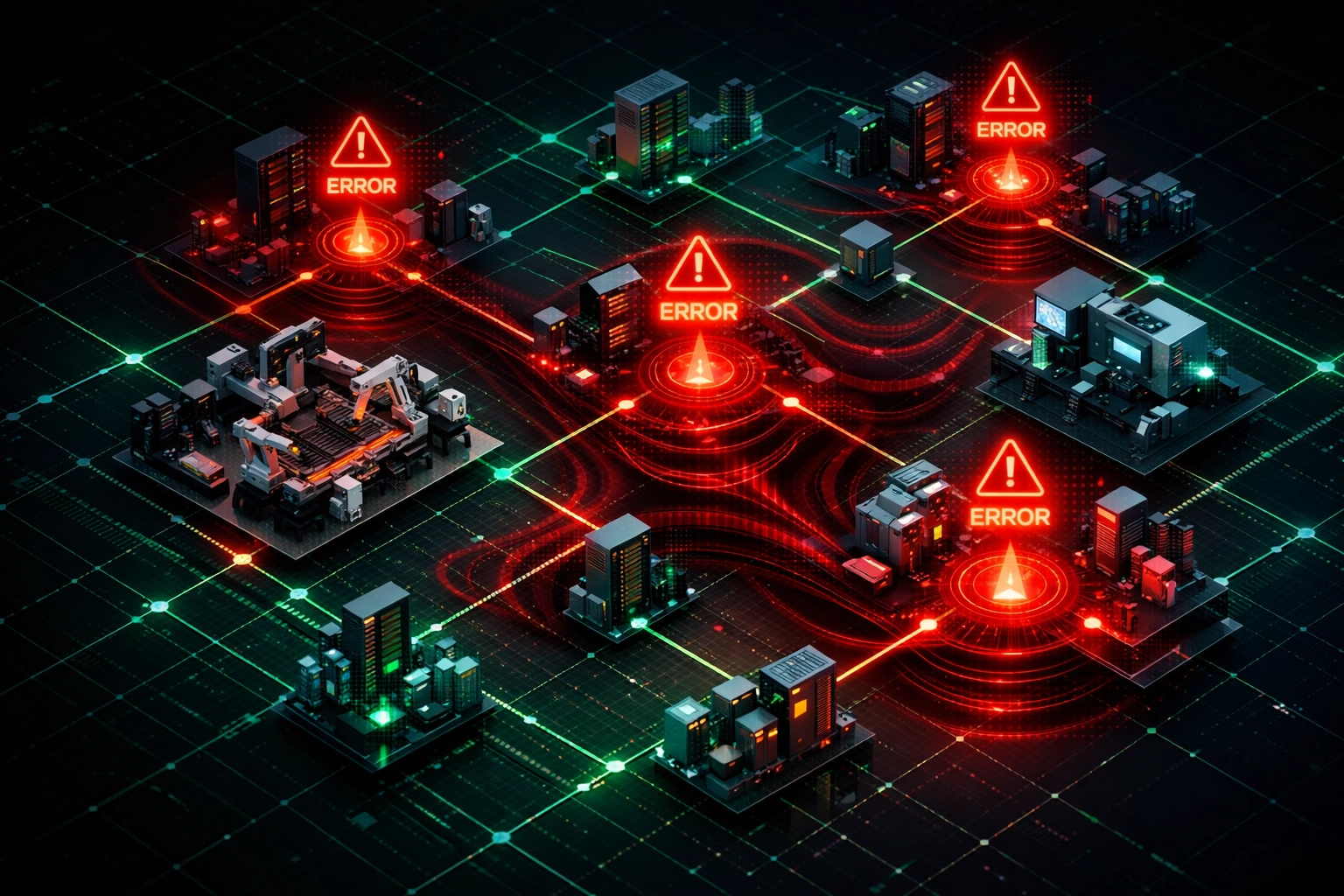
The real cost isn't just the hours you're offline. It's the hours: sometimes days: you spend cleaning up the mess after systems come back.
Why Lincoln and Omaha Manufacturers Are Moving to Managed IT Services
Manufacturers across Southeast Nebraska are recognizing that IT isn't a peripheral support function: it's operational infrastructure that needs the same attention as production equipment.
Here's what's shifting:
Proactive monitoring replaces reactive scrambling. Managed IT services in Lincoln NE include 24/7 system monitoring that catches failures before they cascade. A server throwing heat warnings gets addressed during a maintenance window, not during second shift.
Single point of accountability. Instead of juggling multiple vendors: one for servers, one for networking, one for security: you get one team that owns the full stack. When something breaks, there's no finger-pointing. Just solutions.
Documented infrastructure. Professional managed IT partners maintain full documentation of your environment: network diagrams, system configurations, vendor contacts, and escalation procedures. When an issue arises, response is measured in minutes, not discovery hours.
Integrated physical and cyber security. Manufacturing facilities aren't just dealing with IT risk: they're managing access control for multiple shifts, CCTV for equipment monitoring, and production system vulnerabilities. A converged approach treats your IT network, cameras, and access systems as one unified strategy, not separate silos.
Predictable monthly cost. Instead of gambling on whether this quarter will include a $25,000 emergency IT bill, you pay a fixed monthly rate that covers monitoring, maintenance, security, and support. You can budget accurately.
The best manufacturers don't treat technology as a cost center. They treat it as operational leverage. That requires a partner, not a vendor you call when things break.
Building Resilience Into Production Operations
Resilience doesn't mean nothing ever breaks. It means when something does break, your operation doesn't stop.
Here's what that looks like in practice:
Redundant systems for critical infrastructure. Your ERP server, network core, and internet connection should have failover configurations. If one piece fails, the backup takes over automatically.
Regular backups with tested recovery. Backups don't matter if you can't restore them quickly. Resilient operations include documented recovery procedures and regular testing to confirm you can actually get back online fast.
Segmented networks. Your production floor systems shouldn't share the same network segment as your office WiFi. If one area gets compromised, it doesn't bring down the entire plant.
Clear escalation procedures. When something goes wrong at 2:00 AM, your team should know exactly who to call and what steps to take. That requires documentation and training, not luck.
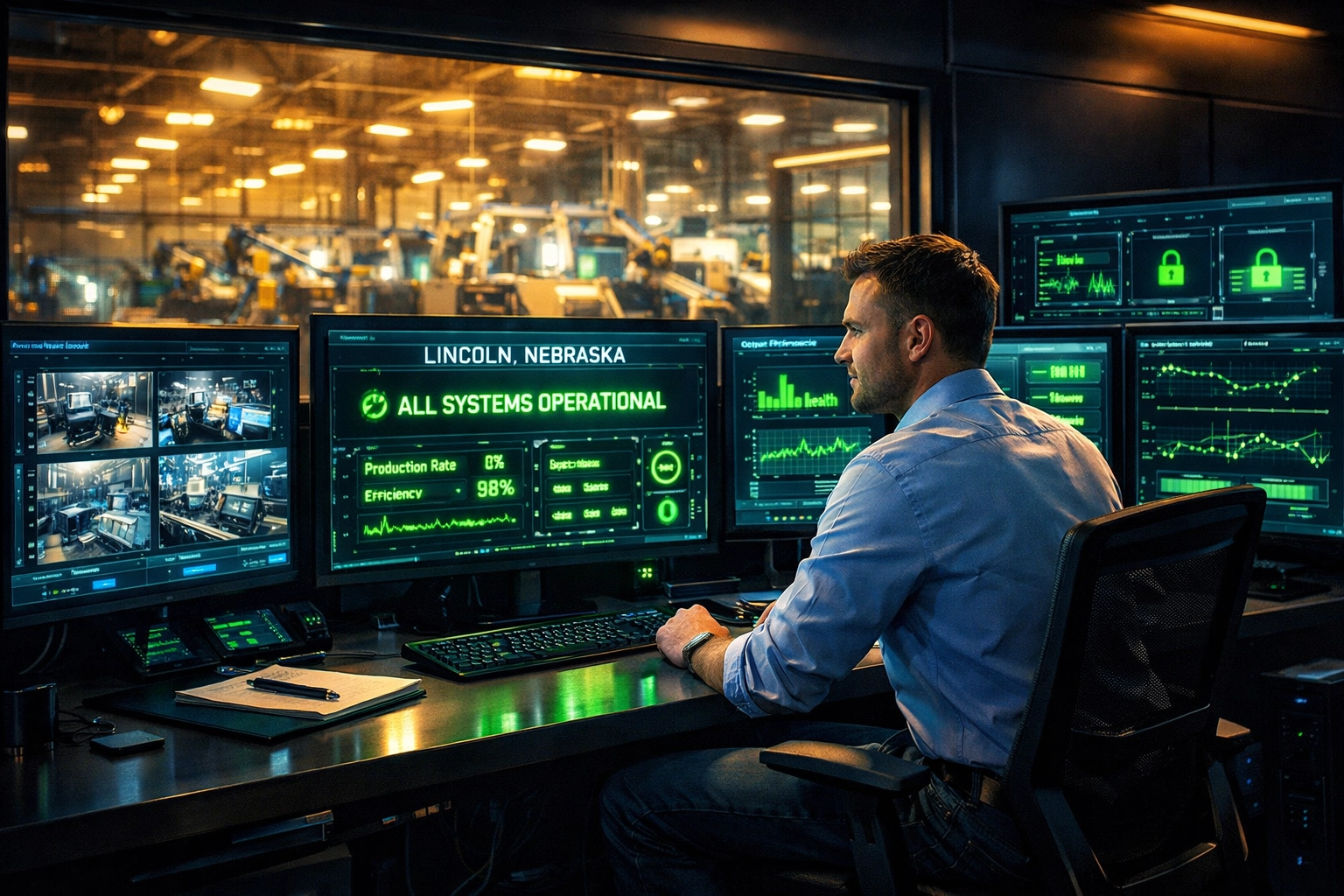
Building this resilience requires investment. But compare the cost of a managed IT partnership to the cost of a single Dark Day and the math becomes simple.
What Manufacturers Should Expect from a Real IT Partner
Not all managed IT services are built for manufacturing operations. Here's what matters:
Operational mindset, not just technical expertise. Your IT partner needs to understand production schedules, shipping windows, and compliance requirements: not just how to reboot a server.
Response speed that matches your operation. If you run two or three shifts, your IT support can't work 9-to-5. Look for partners with defined SLAs and after-hours coverage.
Physical and cyber integration. Your cameras, access control, and IT network should be managed as one system. Separate vendors create gaps.
Local presence. When hardware fails, you need someone who can be on-site in Lincoln or Omaha in hours, not days.
Transparent pricing. You should know exactly what you're paying and what's included. No surprise invoices when something breaks.
SAINT Technology Services was built specifically for businesses that can't afford to go dark. We bring managed IT services, cybersecurity monitoring, and physical security under one accountable strategy because we've seen what happens when those systems operate in silos.
Stop Gambling on Reactive IT
You wouldn't run your production line without preventive maintenance. You wouldn't skip safety inspections because "nothing's broken yet."
Your IT infrastructure deserves the same operational discipline.
If you're still calling vendors only when systems fail, you're not managing risk: you're accepting it. And in manufacturing, that's a bet you can't afford to lose.
Book a Cyber + Physical Health Check with SAINT and get a clear picture of where your vulnerabilities are before they cost you a Dark Day. No sales pitch. Just a straight assessment from people who understand manufacturing operations.
Your production line depends on technology that works. Let's make sure it does.